
A national nonprofit consortium
Technology should serve children. Not the reverse.
We are building the first independent nonprofit consortium that focuses on evidence-based certification for technology and creates responsible model legislation for effective use of technology in America's classrooms — created with educators, researchers, child development experts, legislators, and families.
Our mission is to set an independent, responsible framework and create model legislation for how technology serves every child, in every classroom.
Our work
Four areas of work, built in the open.
Built in the open by our working groups — here is the shape of the work, and where to weigh in.
Framework
The 12 domains & age bands
Every product is evaluated across 12 domains — from privacy and data practices to attention, mental health, and learning efficacy. The framework is calibrated to four age bands spanning PreK through grade 12 — because what serves a kindergartner is not what serves a high-school senior.
About the domainsAbout the age bandsResearch
Research & evidence
Every claim is verified against independent evidence — never taken from the companies selling the product. Researchers on the board set the evidence bar.
About the evidence barPolicy
Model legislation & briefings
Bipartisan, research-backed policy — model legislation and briefings built to work across the political spectrum, created with legislators from both parties.
Request a briefingCertification
Certification framework & tiers
An independent, evidence-based certification for classroom technology — drafted in the open by educators, researchers, child development experts, and families, with the first applications opening in 2026. Four tiers, from Certified to Platinum, show not just whether a product clears the bar, but how far above it.
How certification worksAbout the tiersThis is bigger than any one organization. The framework is being written in the open — by the people it serves.
Who we serve
A full ecosystem, united around children

Families
Independent ratings families can trust
Clear guidance for the choices parents make at home — and at school board meetings.
Get notified when ratings launch
Educators
Procurement grounded in evidence
A level playing field for districts of every size, free from marketing claims.
Join a working group
Policymakers
Bipartisan, research-backed policy
Model legislation and briefings built to work across the political spectrum.
Request a briefingGovernance
Governed for independence, by design
Authority rests with a 23-seat founding board built to keep every constituency at the table — and no single interest in control. Day-to-day work is led by a CEO and executive team of career educators and public-education leaders. Independence is structural, not aspirational — no single funder may exceed 20% of annual revenue.
Educators & district leaders
Teachers and administrators who live these decisions daily.
Researchers
Setting the evidence bar for every certification claim.
Child development experts
Grounding the framework in how children actually grow.
Families & community advocates
Representing the people every decision ultimately serves.
Policy & legal experts
Holding the framework to the highest bar of rigor and law.
Technology industry
A voice at the table — never a controlling one.
Founding leadership
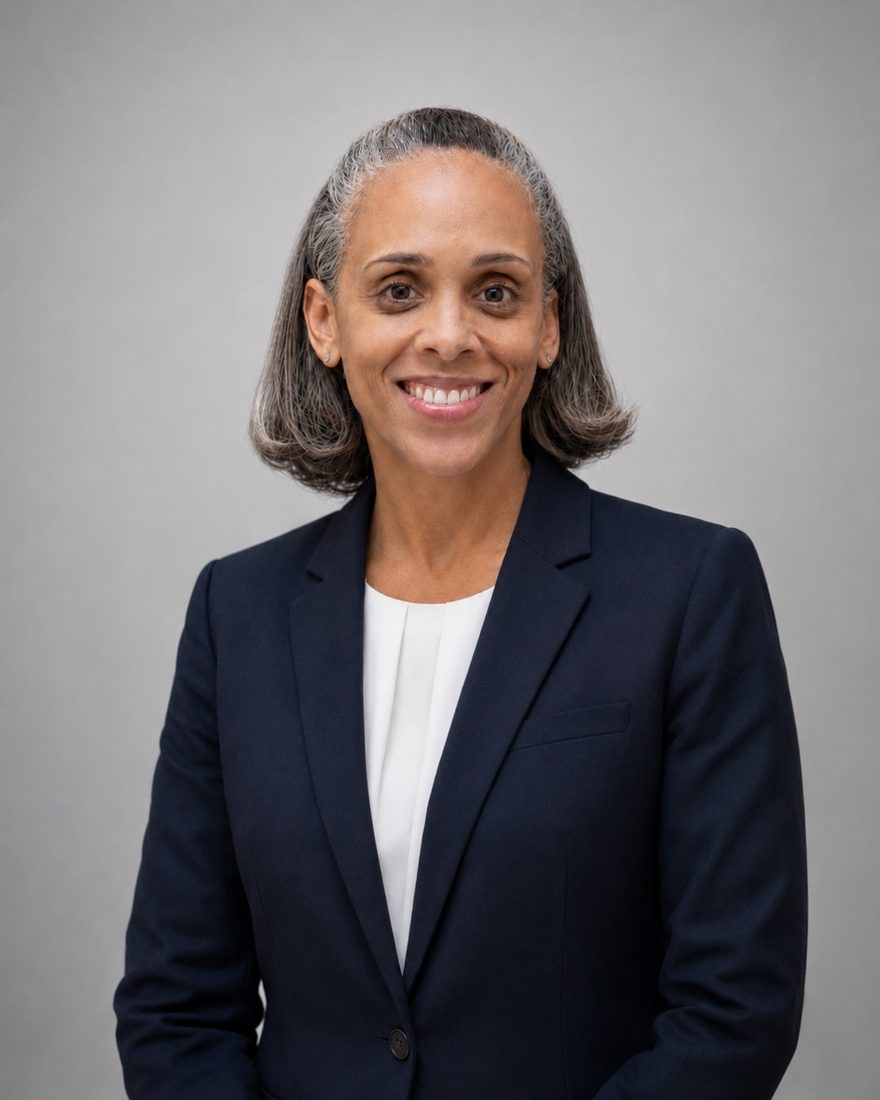
Cristina Meléndez, EdD
CEO
A lifelong educator in both K-12 and postsecondary spaces and an organizational leader, Dr. Meléndez has spent her career ensuring systemic improvement across urban school systems, nonprofits, and higher education. She has led large-scale strategic initiatives serving hundreds of thousands of students and families. She brings a global perspective to RTE's mission of ensuring technology serves children.
She holds a doctorate from the University of Pennsylvania and degrees from Teachers College at Columbia University and Cornell University. She currently resides in New York City with her two children.

Mike Jackson
Founder & Board Member
Mike Jackson is a seasoned veteran of the education technology market, with 30 years in key leadership positions at edtech giants and tech-savvy start-ups, where he has navigated education policy, sales strategy, and trending innovations in learning technology — from floppy disks to AI. He is the founder and CEO of the Texas Education Alliance, working across the dynamic needs of US school districts, edtech solution providers, and state-level legislation to provide expert advisory that improves learning outcomes for children and strengthens policy and processes for educators and legislatures.
Mike serves on several education boards and philanthropic organizations, including SXSW EDU, ERDI, StartEd Mentor, and HeartGift. He is a BETT Global Presenter, having spoken at BETT London, and most recently delivered a session on navigating state-level challenges and opportunities in the US edtech market at BETT 2026. His expertise covers market entry strategy, state and district relationships, government relations, and the policy dynamics that make or break an edtech company's trajectory in the US.
In response to a growing urgency around the effective use of technology in schools — and personal feedback from parent groups, edtech solution providers, and state legislatures — Mike co-founded Responsible Technology in Education. He lives in Austin, Texas, with his wife Sara and five-year-old daughter Phoebe, raised all of his kids in Texas public schools, and plays shortstop for a local sandlot baseball team.

Jennifer Stevens
Founder & Board Member
Jennifer Stevens is a respected education policy advocate committed to improving student outcomes, strengthening schools, and protecting children. She represents educational organizations, education-technology companies, and nonprofit child-advocacy groups, including Texas Against Fentanyl, Moms for America, The Tucker Project, Coaches vs. Overdoses, National Child ID, and National Chaplains in Schools.
Working at both the state and federal levels, Jennifer collaborates with lawmakers, education leaders, and community organizations to develop practical policies that create safe, healthy, and effective learning environments. Her work includes modernizing curriculum standards, promoting greater accountability and transparency, supporting early childhood education, and securing resources that help schools and educators better serve students.
Jennifer has been particularly influential in addressing the fentanyl crisis through education and prevention. She helped advance legislation requiring fentanyl and opioid-awareness education for Texas students in grades 6-12 and has worked to turn that policy into meaningful action through The Tucker Project. Her efforts have helped bring prevention education to schools and communities in Texas and beyond.
Jennifer is also a strong advocate for responsible innovation in education. She works with education-technology companies and policymakers on the effective use of digital learning tools, artificial intelligence, student-data privacy, and technology funding. She is committed to ensuring that new technologies support teachers, strengthen instruction, and improve learning without compromising student safety or replacing the essential role of educators.
At the heart of Jennifer's work is a belief that every child — regardless of ZIP code or circumstance — deserves access to a high-quality, academically sound, values-driven education. Through coalition building, legislative advocacy, and hands-on implementation, she continues to bring together policymakers, educators, families, and community leaders to create lasting improvements for students and schools.
Membership
Membership categories
RTE is built on the principle that the full ecosystem of stakeholders must have a structural seat at the table, and independence rules prevent any sector from dominating.
Educational Institutions
For school districts, charter networks, and workforce boards that select and deploy technology for learners.
InquireTechnology
For ed tech companies, AI platforms, assessment providers, and device manufacturers building products for classrooms.
InquireUniversity / Higher Education
For universities, colleges, research centers, think tanks, and independent researchers studying how technology affects learning.
InquireFamilies
For parents and parent organizations advocating for children in decisions about classroom technology.
InquirePublic Interest
For disability advocates, medical professionals, teacher unions, and civil rights groups representing children and families.
InquireGovernment Affiliates
For state education agencies, congressional offices, and federal agency liaisons working on education technology policy.
Inquire