
RTE summary ofChristendom Panel Explores Catholic Response to AI Through Pope Leo XIV's “Magnifica Humanitas”, college news, Christendom College,
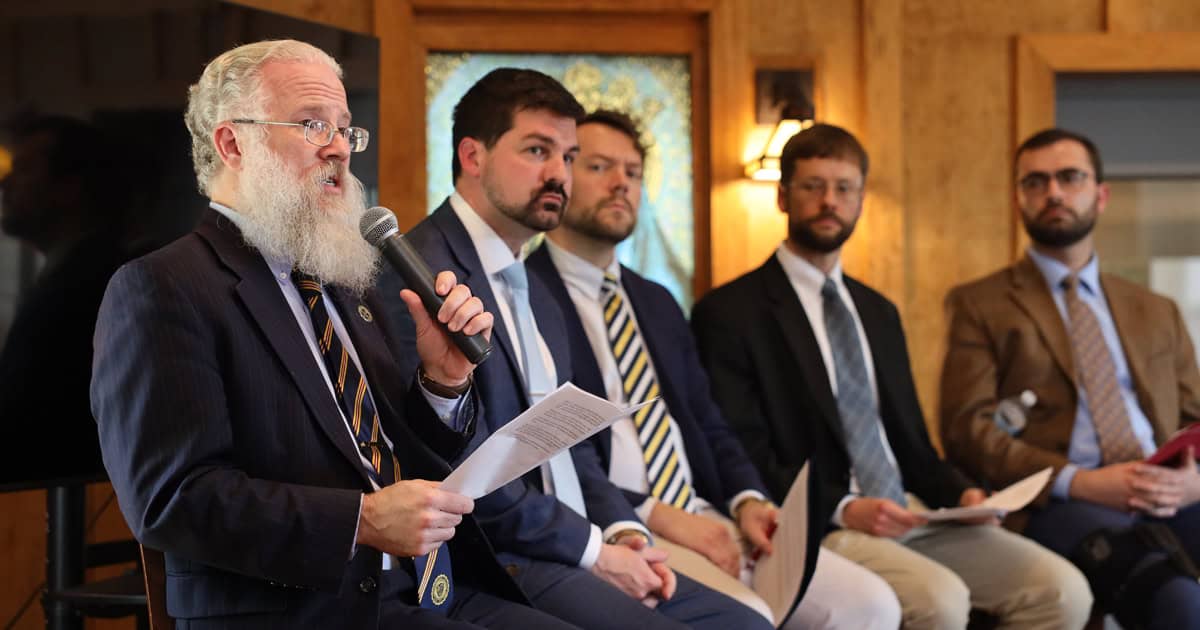
Christendom College's political science department hosted a panel on Magnifica Humanitas, the first encyclical of Pope Leo XIV, released in May, which focuses on protecting the human person in the age of artificial intelligence. The panel included faculty members Nicolas McAfee, Eric Jenislawski, and James Bergida, along with James Van Dyke of the University of Virginia and Michael Marinaccio of the Center for Responsible Technology.
Van Dyke explained how AI works and argued that it does not share in what makes people human. McAfee encouraged students not to treat AI's rise as inevitable and suggested the next generation might move away from it. Marinaccio emphasized that chatbots cannot match human intellect, and Jenislawski examined the encyclical through Catholic social teaching, including human dignity, the common good, subsidiarity, and solidarity. Student questions ranged from surveillance and AI in warfare to practical ways to limit technology in daily life.
Why it matters
Many families think about technology through the lens of their faith and values. Whatever tradition a family comes from, the panel's central question, what technology should and should not do in forming a young person, is one every school community has to answer.
This is RTE's summary. For the complete story, read it where it was originally published.
Read full article on Christendom College (opens in a new tab)Opens on Christendom College.
RTE summaries describe published reporting and commentary. Views and claims belong to the people and publications cited.